
8 minute read · Hiring and project planning
A straightforward room can take more than one working day once preparation, coats and cleanup are included. As a published comparison point, Dublin Deco Painting gives one to two days for a standard room, including those stages. That is another operator's broad Dublin estimate, not a measured Dundalk average or our delivery promise; its opening estimate does not define every included surface or crew size.
The worked walls-only example below spans two working days, with six assumed hours of preparation and application, plus setup, inspection and handback. It shows why active labour and elapsed time differ. Your actual programme depends on the assessed surfaces, products and access.
For a home in Dundalk or nearby, describe the surfaces first: walls only, or ceiling, doors and skirting boards too? Say whether rooms are occupied and whether repairs or other trades are still outstanding. A room count without those details cannot establish a reliable duration.
Preparation time versus painting time
Assessment and preparation come before application. Sound previously painted walls with a few fixing holes are a different job from loose coatings, wallpaper residues or unexplained damp. Some making-good needs its own drying stage. These stages should appear in the programme instead of being squeezed into an optimistic painting estimate.
Separate active work from elapsed time. Active work includes setup, agreed repairs, application and cleanup. Elapsed time also includes waiting for repairs and coatings. Work can sometimes move to another room during a wait, but this depends on access and the room order.
Ask what the proposed duration assumes. Clear rooms, confirmed colours and surfaces needing only routine preparation are meaningful assumptions. If one changes, the programme may change too. Keep a record of unresolved items and who will confirm them before work starts.
A worked two-day room programme
Hypothetical planning example, not our team schedule: one painter works on the walls of an empty 4-by-3-metre bedroom with ordinary 2.4-metre height. The existing compatible coating is sound; no ceiling or woodwork is included. Colours and access are confirmed. There is no wallpaper, active moisture, failed paint or repair requiring an additional drying stage.
The assumed labour inputs are three hours for agreed preparation and one-and-a-half hours per wall coat. These are invented planning inputs, not measured production rates or a promise for a room of this size. The selected example coating is Dulux Trade Advanced Contract Matt. Its inspected sheet gives a two-to-four-hour recoat interval; the illustration reserves four hours after completing the first coat, assuming its specified application and drying conditions are met.
| Stage | Example time | What the time means |
|---|---|---|
| Agreed preparation | Day 1, 09:00-12:00 | Three assumed active hours; no unexpected repair or extra drying stage. |
| First wall coat | Day 1, 12:00-13:30 | One-and-a-half assumed active hours for the complete walls. |
| Reserved recoat interval | Day 1, 13:30-17:30 | Four hours from completion of the first coat; conditions must still meet the specification. |
| Second wall coat | Day 2, 09:00-10:30 | Deferred because this example's working day ends at 17:00. |
| Drying, inspection and handback | After the final coat, when ready | No fixed handback hour assumed. Product condition, cleanup and agreed checks still apply. |
By Day 2 at 10:30, the example has used six active hours across preparation and application, although work has crossed two days. Setup, cleanup and inspection need their own allowance, and full cure is a later milestone. The second coat finishing does not certify that furniture can touch the wall or that the room is ready for every use.
What moves it: an extra two hours of preparation moves the first coat later; a required repair-drying stage may move it to another day. Adding ceilings, doors or a further required finish coat adds work and product dependencies. Moving furniture or maintaining occupied-room access changes the assumed working conditions. Different products can change the recoat interval. Resolve those changes rather than stretching this illustrative timetable to fit.
Occupied and empty-house sequences
An occupied house needs a daily living plan. You may need one bedroom available, access to the kitchen and a route to the bathroom. Tell the painter which requirements are essential. They affect room order and can prevent several spaces being worked on together.
An empty house can provide more flexible access, but it still needs working utilities, suitable conditions and coordination with deliveries. If boxes arrive halfway through, the original access assumption has changed. Plan storage separately from painting areas.
| Arrangement | Plan to agree | Constraint |
|---|---|---|
| Occupied bedrooms | Return one room before starting another | Furniture and sleeping arrangements. |
| Empty house | Keep rooms clear until handback | Deliveries and other trades. |
| Hall and stairs | Agree safe movement at each stage | The main route serves several rooms. |
| Renovation | Confirm readiness room by room | Repairs may finish on different dates. |
Recoat, drying and handback stages
Touch dry, ready to recoat and ready for normal cleaning are different milestones. Paint that feels dry may still be vulnerable to pressure or rubbing. The specification for the chosen coating sets the recoat conditions; it does not set the entire project duration.
For example, the Dulux Trade Advanced Contract Matt technical sheet specifies a two-to-four-hour recoat interval and states that touch drying depends on temperature and humidity. That is a product-specific instruction, not a promise that the room is finished or ready for occupation in four hours.
Handback includes checking the agreed surfaces, removing protection safely and explaining aftercare. Ask when furniture can be brought near walls, when freshly coated doors can close and when marks can be cleaned. Wall and woodwork coatings may have different requirements within the same room.
What can change the programme
- Failed or incompatible existing paint discovered during preparation.
- Leaks, recurring cracks or other defects needing assessment.
- A colour or finish decision changed after work is arranged.
- Restricted access or high areas needing suitable equipment.
- Conditions outside the coating's specified requirements.
- Dust or damage from another trade returning to the room.
Agree how changes will be discussed. A useful update identifies the cause, affected surfaces and next decision. If extra work is proposed, clarify the scope and price before assuming it forms part of the original agreement.
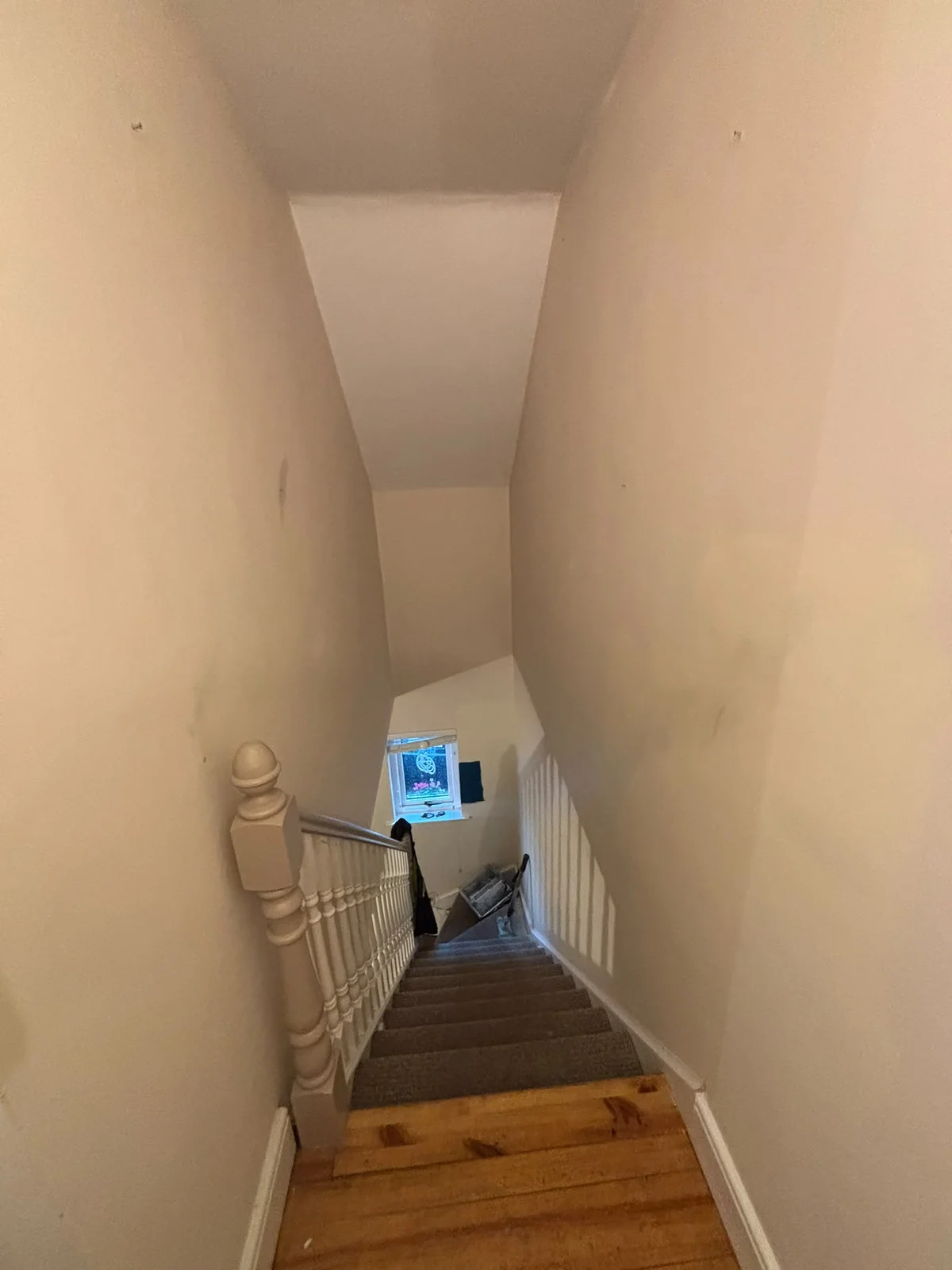
One room or the whole house: phasing the work
When a phased repaint makes sense
Phasing can suit a home with limited storage, staged budgets or unfinished building work. Each phase needs a complete scope and sensible handback. A whole room or continuous surface is usually a clearer boundary than stopping midway across a visible wall.
Access and disruption compared
A full-house scope may allow stages to overlap across rooms. Phasing may repeat setup, furniture moves and visits. Neither arrangement is universally faster or cheaper. Ask about the practical consequences for your actual house rather than multiplying a single-room estimate.
Keeping colours and finishes consistent
Record manufacturer, product range, colour code, finish and surface for later phases. A colour name alone does not identify the coating. Keep labels or a written schedule, and recognise that later touch-ups may show even when the nominal colour matches.
Comparing the complete scope
Hypothetical example: a household completes the spare bedroom first, waits for agreed handback, then moves sleeping arrangements before the main bedroom starts. The stairwell is a separate phase because it affects everyday access. This example shows dependencies, not a team schedule or duration promise.
Compare the combined scope and arrangements with a continuous project. If a fixed event date matters, identify what can sensibly be completed before it rather than compressing necessary preparation or product intervals.
For the next decisions, see Paint drying time versus curing time, Painting before moving into a house, Interior painting cost in Dundalk. Our interior painting service in Dundalk explains the work you can enquire about.
Find the stage that controls the finish date
Ask which unresolved stage currently controls handback. It could be a repair becoming ready, access equipment being assessed or the selected woodwork system. Adding more rolling time to the diary will not resolve a different dependency.
In a hypothetical two-room project, the first room may be available for application while the second awaits a plaster repair. That gives a useful sequence to discuss, but it does not promise that every waiting period can be eliminated by switching rooms.
Update the controlling dependency when it changes. This makes programme discussions more concrete: “waiting for the repaired wall to be assessed” explains more than “painting is taking longer”. It also identifies who needs to provide the next piece of information.
Questions about painting programmes
Can another room be painted while one coat dries?
Sometimes, if access and the work sequence allow it. This is one reason a whole-house programme cannot be calculated by simply multiplying a single-room duration. The next room must be ready, materials and protection must be organised, and the previous room still needs the specified recoat conditions.
Does an empty house always finish faster?
Clear rooms can make access simpler, but they do not remove preparation, product intervals or repair dependencies. An unheated property, delayed key handover or flooring work can still affect the programme. Describe both the access advantage and remaining constraints when discussing the schedule.
When can I book furniture delivery?
Use the agreed room handback and selected coatings advice, not only the last application time. Tell the painter what will be delivered and where it will go. Fresh surfaces may need clearance from pressure or rubbing. Confirm a contingency if either the painting or delivery programme changes.
Interior painting: discuss your surfaces and scope. Contact the team with your area and photographs.