
6 minute read · Fence painting
Choose fence paint colours beside the house, paving and planting, then test the shortlist on the actual timber. Check opacity and previous treatment before committing. A dark stain, pale opaque paint and weathered bare board will not give the same result from the same colour name.
For a Dundalk garden, use the light and materials you actually have rather than a claimed local trend. The fence may be a backdrop, a visible design feature or a mixture of both. Decide that role before choosing the shade for a fence painting enquiry.
Compare the boundary with house and garden
Start at the main viewing point: the kitchen window, patio or seating area. Identify the largest retained surfaces and the planting visible against the fence. Include the house wall, frames, paving, shed and any neighbouring boundary that will stay. A fence colour should be judged in that setting, not in isolation on a phone.
A darker background can create stronger contrast with pale flowers and light foliage. A pale fence can brighten the appearance of a shaded corner but may become more visually prominent. Timber colours can connect to existing garden structures. These are options to test, not rules that every small garden needs a dark boundary or every shaded garden needs white.
| Garden priority | Comparison to try | Watch for |
|---|---|---|
| Quiet planting backdrop | Muted or deeper sample beside foliage | A dark tone looking too strong across the whole run |
| Lighter enclosed space | Pale sample beside paving and walls | Glare or a patchy result over dark treatment |
| Connection to the house | Sample related to frames or masonry | An exact match looking flat on another texture |
| Timber character | Suitable translucent candidate on actual boards | Existing colour altering the final tone |
| Mixed old and new boards | Same system tested across both | Different absorption or underlying colour |
If the house exterior is also changing, use the exterior colour guide to coordinate the two decisions. The fence does not have to match the wall exactly; a considered relationship can be more comfortable than an uncertain near-match.

Test samples in actual light
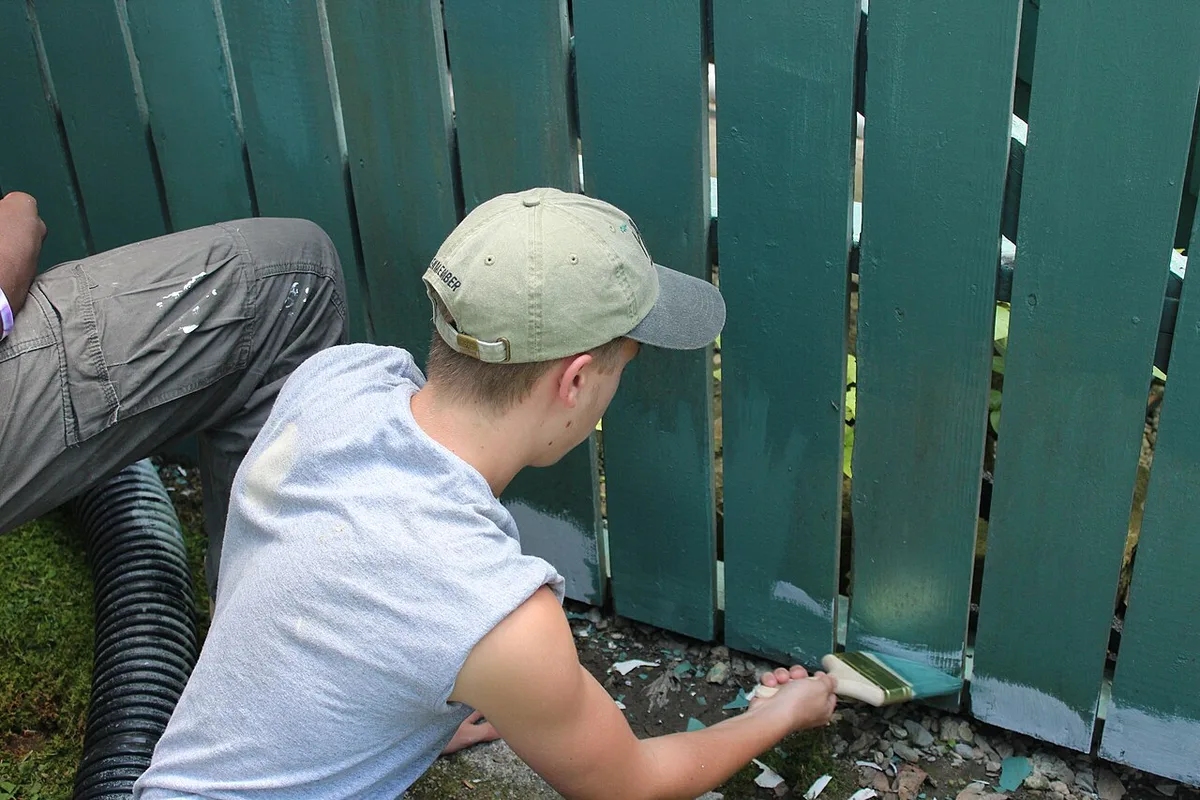
Test a small representative area or suitable board according to the product guidance. Use the intended coat system and allow the sample to dry before judging it. Label the product, colour and number of coats so two samples are comparable.
Look from indoors and outdoors, in direct light and shade. The long boundary may read differently from a close-up. View it beside retained fence sections too if only part of the run is being repainted. A small new patch can look unlike weathered paint of the same original colour.
The Cuprinol Garden Shades information states that final colour varies with the surface and coat application and recommends a test area. That is more useful than assuming the online swatch is an exact prediction.
The Ronseal Fence Life Plus guide also includes a small colour test before proceeding. Use the current instructions for the selected product rather than transferring a test schedule from a different treatment. For the general sampling method, see choosing paint colours with samples.
Consider opacity and existing treatment
A translucent finish leaves the underlying timber colour more involved in the result. An opaque finish gives a stronger colour change, though physical grain and texture can remain. Neither term establishes compatibility with an old waxy, oily or flaking treatment.
If the fence is already dark, check a representative pale sample before buying the full quantity. Do not assume an extra coat alone resolves staining or adhesion. The paint versus stain guide helps separate appearance from the product-system decision, and the fence workflow covers previous treatments and preparation.
Mixed boards need particular attention. A hypothetical garden has weathered brown panels and a new pale replacement section. The homeowner tests one muted opaque colour across both. If the appearance differs, the system and preparation need checking before deciding whether the contrast is acceptable. A screen palette cannot resolve that material difference.
Do not hide damaged timber or recurring peeling behind a colour decision. Confirm soundness and the cause of failure first. The most appealing swatch is not a suitable specification if it cannot be applied to the identified surface.
Agree both sides and neighbour-facing scope
Write down which faces, posts, rails and gates are included. The reverse may have another colour, another treatment or no practical access. Resolve permission and ownership questions before including a neighbour-facing face. This guide does not establish who owns a boundary.
Gaps between boards matter during application. Protect the far side and nearby surfaces using an appropriate method. A brush or spray decision must consider the product, garden and surroundings; this article does not promise that the team offers spraying.
- Main viewing point and fence role agreed.
- Retained house, paving and planting compared.
- Exact product, colour and finish recorded.
- Representative old and new timber sampled.
- Opacity and compatibility checked.
- Faces, posts, rails and gates written down.
- Permission, access and surrounding protection resolved.
If you are only changing the garden-facing side, include the visible top and edge boundaries in the scope. An intentional transition is easier to plan than an accidental line discovered during application.
Use a short sample decision sheet
Beside each dried sample, note four observations: appearance from the main indoor view, appearance beside planting, relationship to paving and consistency across old and new boards. Write what you see rather than a score with false precision. A hypothetical charcoal sample might work well behind pale foliage but feel too strong beside a light patio; a muted brown might connect the timber but disappear less effectively behind plants. Those are useful trade-offs to choose between. If neither sample meets the brief, change the shortlist before coating the whole run. Keep the final decision tied to the exact tested product and underlying timber.
Fence colour questions
Will a dark fence make the garden look smaller? There is no reliable universal answer. View a representative sample from the main seating or indoor viewpoint. Planting, daylight, paving and the height of the boundary affect whether the dark tone recedes or feels dominant. Judge the whole setting rather than a small colour card.
Can I match the fence exactly to the house? You can choose related references, but different products, sheen and texture can make the same colour appear different. Test both materials together and decide whether a close relationship is sufficient. Do not promise an exact visual match across masonry and rough timber.
Can I use reference photographs to choose? They help communicate a direction, especially contrast and colour relationships. Treat them as inspiration unless they are verified work. Lighting, editing and screen settings prevent a photograph from establishing the final paint shade on your own fence.
Fence painting: discuss your surfaces and scope. Contact the team with your area and photographs.