7 minute read · Existing panelling and design
Wall panelling costs make sense only when you separate the panels, their fitting and the painted finish. A kit price is a material price, not the cost of a completed wall. Repainting sound existing panelling is a different job again: you may need no new panels, but the condition of joints and old coatings still matters.
For a home in Dundalk or nearby, start by deciding which of those jobs you actually need. Dundalk Painting Services paints existing panelling. The fitting information below helps you compare responsibilities; it is not confirmation that we supply or install panels.
Separate materials, fitting and decoration
Put three headings on your budget sheet: materials, installation and decoration. Under materials, name the actual product, dimensions, quantity and any capping or edge trims. Under installation, record measuring, cutting, fixing and coordination around switches or radiators. Under decoration, record surface preparation, compatible primer and finishing coats.
A headline price per square metre can hide important differences. Applied strips use the original plaster wall as the inside of each rectangle. A fully sheeted panel covers it. Those options can have similar visible patterns but different material quantities and preparation needs. Ask whether the wall within the frames is included in the painting price.
For existing panelling, replace the installation heading with an assessment of what is already there. Are panels secure? Is the finish simply tired, or is it peeling? Are joints opening repeatedly? A repaint allowance should not quietly become a promise to correct a fitting or moisture problem.
What current Irish kit prices actually tell you
As a dated material example, on 31 October 2026 Goodwins listed an unfinished MDF shaker kit at €15.50 including VAT, containing six strips measuring 1.2 m by 63 mm by 9 mm. That describes what is in the pack. It does not tell you how many packs your design requires, whether they are locally available, or what fitting and finishing will cost.
A different product illustrates why names alone are unreliable: Woodie's Traditional Shaker kit was listed at €49.99, in unfinished pine, with approximate coverage of 2.49 m². This is not a directly equivalent MDF pack. Retail prices and offers can change, and collection or delivery arrangements need checking before purchase.
Treat those figures as product examples, not a local installed price range. Neither retailer's listing establishes a labour rate for a Dundalk home. We have not added a guessed fitting charge or multiplied a competitor's estimate into a supposedly reliable quotation.
| Budget line | What to describe | What to check |
|---|---|---|
| Panel materials | Exact kit or sheet, profile and quantity | Does quoted coverage match the proposed pattern? |
| Fitting | Straight walls, corners, cuts and obstacles | Who measures, fixes and makes good? |
| Decoration | Wall fields, edges, rails and existing coating | Primer, repairs and finish included? |
| Associated work | Electrical fittings, radiators or skirting changes | Who is qualified and responsible? |
Compare size and layout complexity
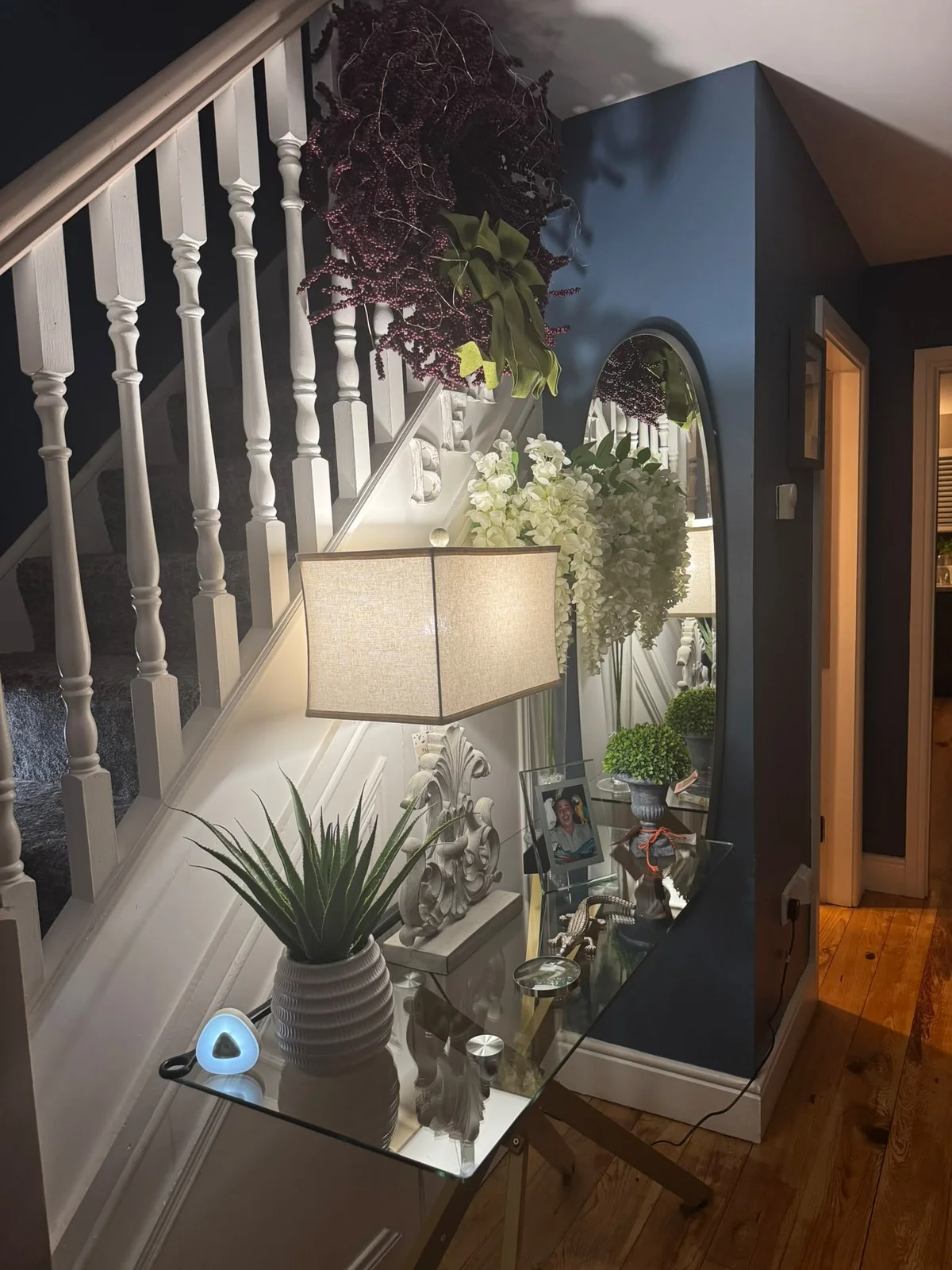
Measure each wall separately rather than giving only the room's floor area. Record wall length, proposed panel height, door openings and the number of internal and external corners. Include photographs showing sockets, radiators, switches and existing skirting. Stair slopes and short returns deserve their own entries.
Here is a hypothetical comparison, not a customer quotation. Wall A is a clear 3 m bedroom wall with four rectangles. Wall B has the same overall dimensions but includes a door return, two switches and a radiator. Their painted areas may be close, yet Wall B creates more junctions and access questions. A square-metre rate alone cannot describe that extra detail.
For a preliminary strip calculation, add the actual lengths shown on your sketch, then check how they can be cut from the supplied stock. Buying 12 m of strips does not guarantee that a layout needing 12 m will fit without joins or waste. The fitter should confirm the cutting list before you order. Our spacing and height guide explains how to build the measured sketch.
Making-good, priming and paint
New unfinished material and a previously painted panel need different preparation. Bare MDF edges can take up coating differently from the smooth faces. The European Panel Federation's finishing guidance explains the role of an appropriate sealer on machined edges. That is a reason to specify a compatible system, rather than count every white undercoat as interchangeable.
For an existing finish, note chips, grease, loose coating and any unknown previous paint. Ask how compatibility and adhesion will be assessed. Do not assume that extra topcoats compensate for weak material underneath. Repeated cracks, swelling or damp staining need their cause considered before cosmetic making-good.
List the paintable surfaces precisely: panel faces, cut edges, top rail, skirting, wall fields and adjoining wall. A dark-to-light change, a different sheen or detailed mouldings may alter preparation and application. These are questions for the actual scope, not grounds for promising a universal number of coats or drying schedule. Compare nearby trim using our woodwork painting cost guide.
Separating kit/material costs, fitting and painting
A DIY kit can reduce purchased fitting labour, but it transfers measuring, tools, cutting, fixing and mistake risk to you. Before choosing, write who is responsible for each stage. Include locating concealed services, maintaining access to electrical fittings and correcting an uneven wall. Do not start by cutting around a switch and deciding electrical responsibilities afterwards.
A fitted service may include some making-good but leave decoration to another person. Ask what condition the panels will be handed over in, whether adhesive or fillers need further drying, and who addresses loose joints or misalignment discovered before painting. Confirm those points directly with the supplier or fitter. We do not assume responsibility for installation simply because we are asked to paint it.
For your own comparison, use a responsibility checklist: who measures and orders; who supplies tools and fixings; who installs; who deals with electrical or plumbing alterations; who prepares the fitted surfaces; who supplies paint; and who corrects an installation defect. A blank answer is an unresolved cost, even when the headline quotation looks complete.
Confirm who supplies and fits the panels
Keep two decisions separate: the design you want and the contractor scope you have actually agreed. Ask the fitter to confirm material suitability for the room, the layout drawing and any constraints before buying. Ask the decorator to assess the fitted surface and identify the intended coating system. Neither conversation substitutes for the other.
For an existing-panelling painting enquiry, send your location, dimensions if available, a full-wall photograph and close-ups of damage. Say whether ceilings, wall areas and doors are part of the same refresh. Photos help start the discussion; a visit may be needed to establish condition or access. Nearby coverage is checked against the individual address.
Keep the material receipts and the names of any coatings used. They are useful later if you want to extend the design or maintain the finish. The most useful budget is one that explains the completed scope and its outstanding decisions, rather than a single low kit price beside a picture of a finished room.
Questions before you decide
Can I compare a kit price with a fitted quote?
Only after separating what each includes. A kit may contain strips but omit trims, adhesive, tools, mistakes, fitting and decoration. Ask the fitted provider to identify those lines too. Compare the same measured layout and finished surfaces, including any wall visible inside frames. A cheaper pack does not establish a cheaper completed project when the material, quantity or responsibility differs.
Does more panel area always mean a proportionately higher price?
Area is useful, but detail and access can change the scope independently. A clear bedroom wall and a stair wall of similar area may involve different junctions, preparation and access. Ask for the actual wall runs and included surfaces to be described. Do not multiply a small-job price into a whole-house estimate without checking whether the work is genuinely comparable.
What if the kit is bought before the layout is checked?
Keep the packaging and product specification, then have the proposed layout and cutting requirements confirmed before using it. The available lengths may constrain where joins occur or leave short pieces unusable. Tell the fitter and decorator what you already own rather than assuming it suits the room. Any returns, replacement quantities or changes to the design should be resolved before a final scope is agreed.
Read more about panelling painting in Dundalk before sending your project details.
Painting existing panelling: discuss your surfaces and scope. Contact the team with your area and photographs.