
6 minute read · Woodwork and coating choices
Painting stair woodwork is as much an access decision as a colour decision. Name the handrails, spindles, newel posts and strings you want painted, then work out how the household can use the stairs while preparation and coatings are in progress. Stair treads and floor finishes are a separate specification.
In an occupied home, a handrail may be essential rather than decorative. Never assume that painting alternate spindles or working on one side automatically leaves a safe route. The usable route, the need for hand support and drying restrictions all belong in the initial discussion about interior painting in Dundalk.
Name handrails, spindles and strings
A stair photograph contains several different surfaces. The handrail is the part people hold. Spindles or balusters are the upright pieces beneath it. Newel posts are the larger posts, while strings are the sloping side members beside the steps. Some stairs also have wall-mounted rails, painted underside panels or timber around the landing edge.
List the included parts before discussing the finish. A quote for "banisters" may be interpreted differently by different people. Count the spindles approximately and show their shape: plain square members differ from turned profiles with repeated grooves. Include the hidden face of the landing balustrade if it is part of the job.
| Part | Condition detail to show | Planning question |
|---|---|---|
| Handrail | Worn top, joints and underside | Can everyone manage safely without touching it? |
| Spindles | Profiles and tight gaps | Can both faces be reached without unsafe leaning? |
| Newel posts | Caps, corners and previous repairs | Which adjacent surfaces need protection? |
| Strings | Sloping faces beside carpet or treads | Where is the agreed paint boundary? |
| Landing balustrade | Room-side and stairwell-side faces | What suitable access is required? |
Identify timber, varnish, old paint and any factory-coated components. A dark clear finish under a proposed opaque colour may need a different primer decision from an already painted spindle. Use the varnished wood guide when that is the starting surface. Loose rails, moving posts or damaged joints require assessment before decorative work.
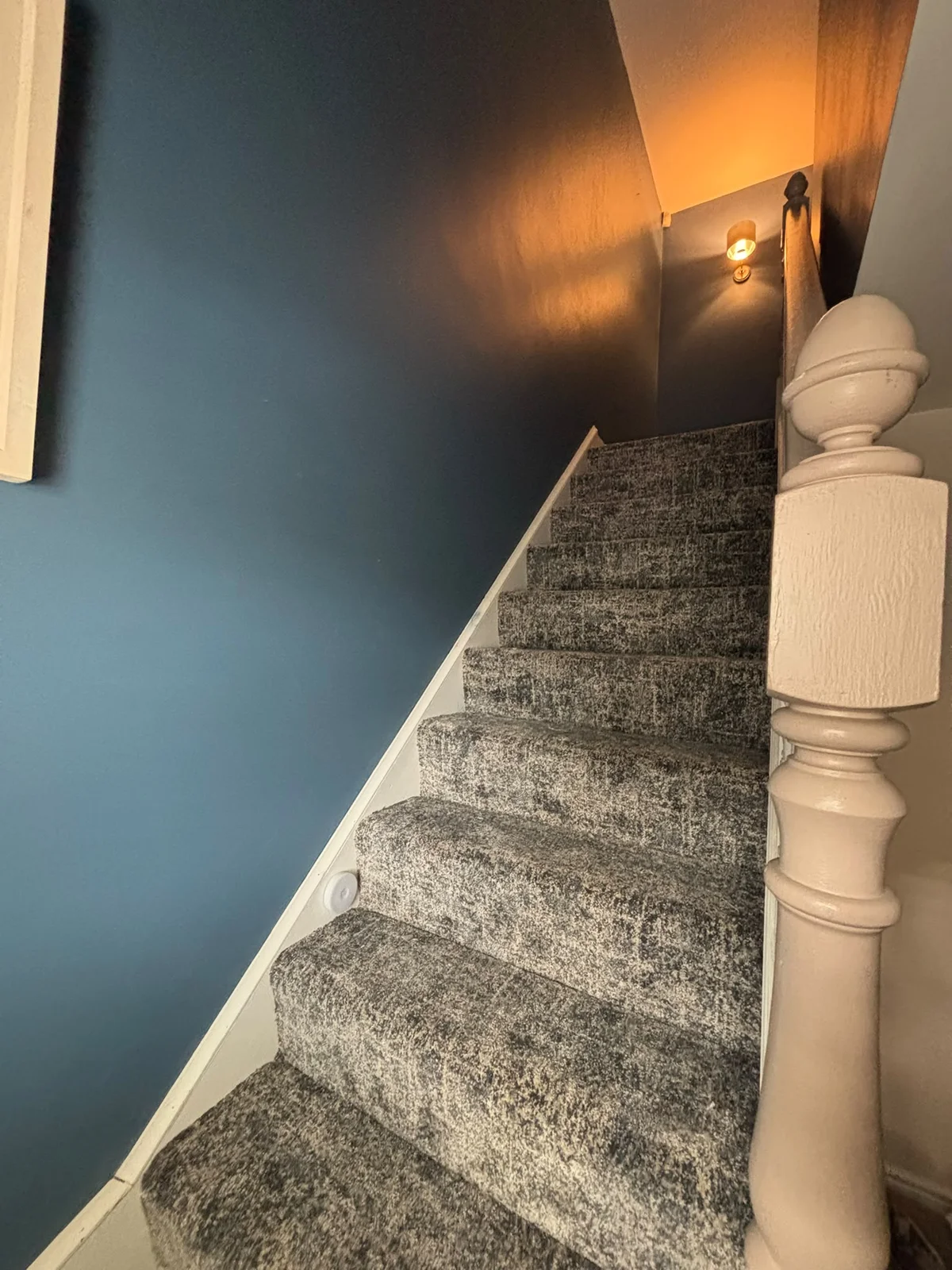
Plan circulation and access
Write down who needs the stairs and when. Think about bedrooms, bathrooms, school mornings, shift work, pets and anyone who relies on a rail. Mention a second staircase only if it is actually usable. A plan that depends on stepping around wet paint is not a safe access plan.
The landing side of a balustrade can be difficult to reach. Do not improvise a platform over a stairwell or lean beyond a rail. Ask what suitable access is required and whether any other work needs to happen first. If access arrangements change the quotation, have that recorded before booking.
Consider dust and protection separately from the final coats. Nearby carpets, runner edges, walls and light fittings can all affect preparation and application. Do not assume a runner will be removed, or that painting can reach every edge while carpet remains in place. Explain the existing arrangement so the intended boundary is realistic.
For a wider hall project, use the hall, stairs and landing planning guide to coordinate walls, ceilings and woodwork. Moving all the household activity into one narrow route can matter more than the total painted area. A room-by-room programme is useful only when each stage leaves a genuinely workable route.
Drying between everyday use
A coating can feel dry before it is ready for repeated hand contact, masking or cleaning. Ask for the product's recoat and normal-use requirements and allow for the conditions in the hall. A cool enclosed stairwell is not the same environment as a warm, well-ventilated room.
The Crown Trade Fastflow Quick Dry Eggshell technical sheet separates new timber from previously decorated timber and requires a suitable sound, clean base before coating. It gives recoat conditions separately from full drying and describes Fastflow as a system. This is a specific woodwork example: its quick-dry name is not permission to put a freshly coated handrail straight back into heavy use. The linked sheet carries UK and Irish supplier details; check the latest local version when specifying.
Dulux's stair painting guidance includes rails and other stair surfaces. Use its general reminder to follow the tin's drying instructions, while keeping this project's woodwork scope separate from any steps or floor coating. Broad online stair guides often combine jobs that need different products and safety arrangements.
A hypothetical household with one upstairs bathroom and a person who needs both handrails cannot solve access by promising to "be careful". It needs an agreed arrangement before both rails are coated. Depending on the home, that may change the timing or the work sequence. It does not establish that a particular phased method will be offered.
- Confirm the route before each restricted stage.
- Keep children and pets away from fresh coatings and preparation areas.
- Use ventilation consistent with product instructions.
- Avoid gripping, wiping or covering uncured handrails.
- Keep the selected product and colour details for future maintenance.
Separate woodwork from tread or floor coating
Paint for trim is not automatically suitable for a surface walked on. Treads need an appropriate floor system and an assessment of wear, slip considerations and access. Risers, carpet edges and bare timber steps also need to be named rather than absorbed into a vague "paint the stairs" request.
This guide covers the decorative woodwork around a staircase. It makes no offer of tread coating, floor restoration, stair repairs or specialist access services. If you are considering those jobs, establish the responsible trade and specification before the decorative work is arranged.
Choose sheen with both appearance and contact in mind. Compare satin, eggshell and gloss on a representative profile beside the wall colour. A dark rail can define the stair while lighter spindles reduce the visual weight, but the combination is an option to test, not a rule for every hall. A sample is more useful than a photograph from a different house.
Before accepting the scope, read it as a component list: rails, spindles, posts, strings and landing faces; condition assumptions; access; primer and finish; protection; drying restrictions; and excluded steps or repairs. That gives everyone a clearer picture of the actual work.
Practical questions
Does painting alternate spindles keep the stairs usable?
It does not establish a safe access plan. Household members may still need the rail, and tools, protection or drying surfaces can affect the route. Assess circulation and hand support explicitly. Do not rely on a staged decorative method as proof that everyone can use the stairs safely.
Can the handrail stay as timber while spindles are painted?
That can be a design option if the retained finish is suitable and the boundary can be protected. Record the rail as retained timber rather than implying refinishing is included. Sample the painted colour beside it and clarify any separate treatment or repair responsibility before the work begins.
Are stair risers included with the banisters?
Only if they are named in the scope and have an appropriate specification. Rails, spindles, strings, risers and treads are distinct surfaces. In particular, a trim-paint discussion does not approve coating surfaces walked on. Confirm the actual components and any separate floor or step work.
Interior painting: discuss your surfaces and scope. Contact the team with your area and photographs.